
The Feed is Hungry and Legal is Still Typing.
Ellie Sanchez and Allison Shannon, Roommate founders, discuss the demanding mother-in-law ruling your marketing mix right now, we call her “The Manic Middle”
Ellie: We all know you were getting too comfortable and needed a little drama, right?
Kidding, of course. One of the most influential and important drivers in your marketing mix is also the most overwhelming and untenable for most. This new social landscape is more demanding than all other channels. Now, in addition to all the new functions and OKRs you’ve picked up in the last year, your media team would also like 10x the creative production, each piece with a lifespan akin to a sneeze. And we’re not talking about versions of that brand campaign you’ve worked so hard to create. No, this new machine wants variety, creators, anything and everything that is going to push you out of your comfort zone and feel off-brand. To stay ahead, you need to beat out the influencer with a ring light who posts 4x per day with no legal or brand review.
This all feels INSANE. Is it really so important for brands to meet these content demands?
Allison: The algorithm advancements are why the content demands have gone crazy.
Your team is being asked to make so much creative because of how the platforms sort and serve it. I think of the Meta algorithm as a very powerful, very judgmental librarian. She looks at what your content shows, what it says, how it sounds, and how people respond. Then she groups it with similar content and serves it to people who already engage with that kind of thing.
That is why one Heated Rivalry fan edit quickly becomes ten more. The system sees what holds your attention and brings you more of the same. TikTok’s automated ad tools work toward the same basic goal, choosing creative, audiences, and delivery based on what the system predicts will perform.
For brands, that means you need to give the librarian more options. Different messages, visuals, talent, formats. Each one gives the platform another possible match and another way into a new audience. Having volume and creative diversity allow your campaigns to scale.
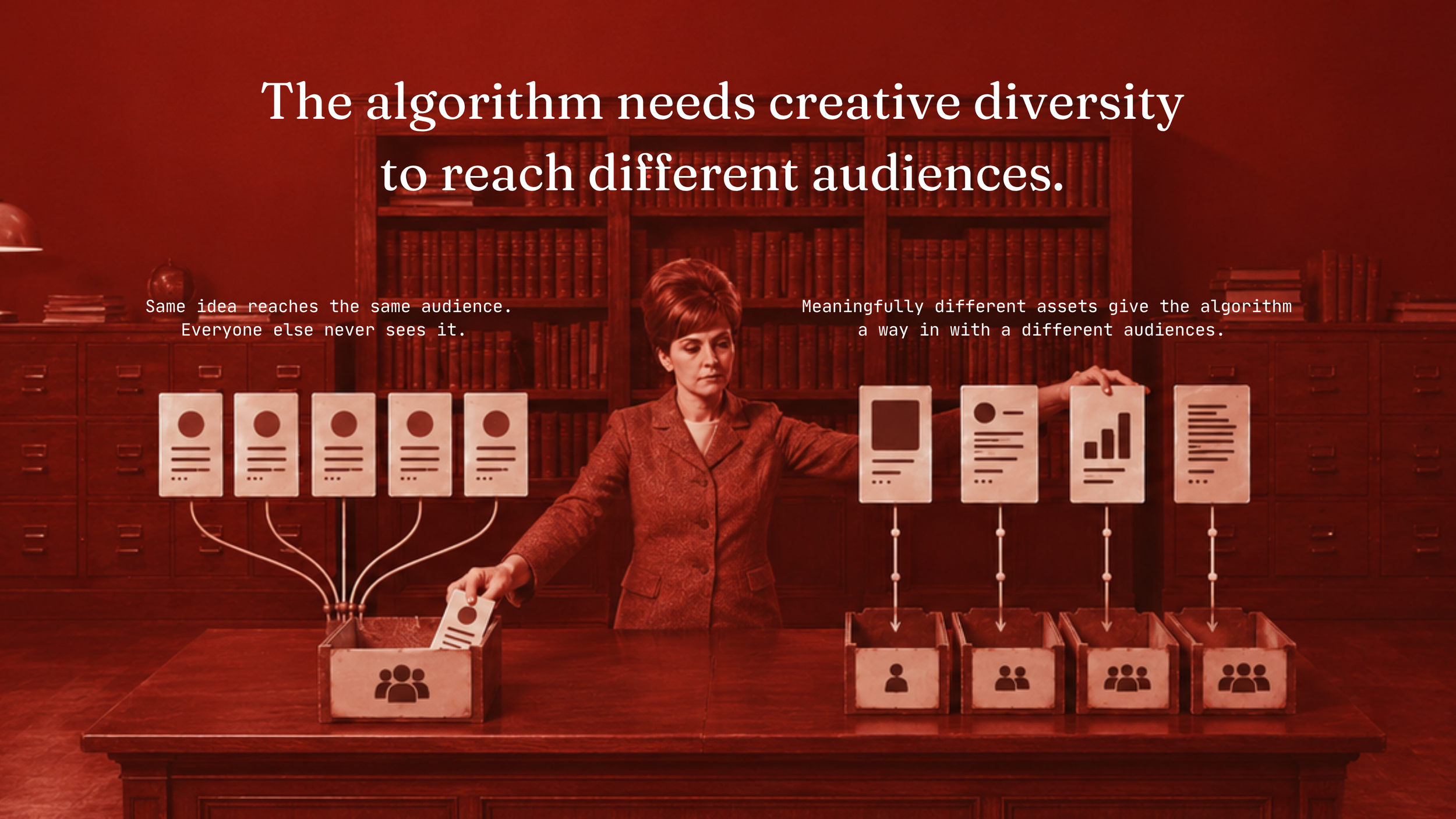
Allison: This is why old campaign thinking is now hurting your performance.
I see creative directors die a little inside when I explain that the old way we used to work — pitch 3 amazing campaign concepts, pick one (hopefully) and do a huge shoot for TV, then mine that shoot for assets for social/digital etc — is no longer enough.
The problem is that all those assets still look and feel like they came from the same idea. To our judgmental librarian, a new crop, headline, or CTA may not register as a genuinely new creative option. You made nine things, but the platform may bundle the whole pile together as one. (This is clustering).
Ouchie. Think about that the next time you are on V7 of a headline. All those tiny revisions may matter deeply to six people in your slack channel, but they do not necessarily give the platform a genuinely new creative option. Spend that time on making new ideas.
Ellie: But, what if you’re not a DTC brand with an incredibly simple value prop that can spin off new ideas on a whim?
There is no question this is a much easier ask for companies with large catalogs at smaller price points who will ship the moment you order. These brands have figured out how to make the purpose and purchase realized in two motions. The dress that fits any body type, the pan that replaces eight pans, the skincare product that is going to eliminate my laugh lines overnight. The promise is clear, the average order value is justifiable and your order is in hand before you even have a chance to regret it. The ROAS is indisputable.
But what about all those other brands out there? The service kind, the B2B types, the B2B2C….the more complex. These brands have a much harder job. The products require context. The customers need education. The purchase path isn’t straight forward. And more crucially, their organizations are more fragmented, have more stakeholders, more guidelines, and a lot more to protect.
For most brands like this, social sits at an intersection in their organizations. It reaches across brand and performance, paid and organic, campaigns and creators, production and media. The work has to move together, but the people responsible for it usually sit on different teams with different budgets, timelines, and definitions of “good” content.
Whew….I mean, this is marketing. It really shouldn’t feel this hard.
Allison: The Gap is “The Manic Middle”
Yep. This is the part that is really hard for internal creative teams. On one end, you have a big campaign. One strong idea, beautifully produced, then resized and recut until everyone is sick of looking at it. On the other end, you have creator platforms and UGC shops producing a high volume of people talking into their phones.
Most brands are missing the creative that is in between those two options. We call that gap the Manic Middle. You need enough creative range for the algorithm, enough volume for the media plan, and enough thought and control for the work to still feel like the brand.
The Manic Middle needs a system behind it.
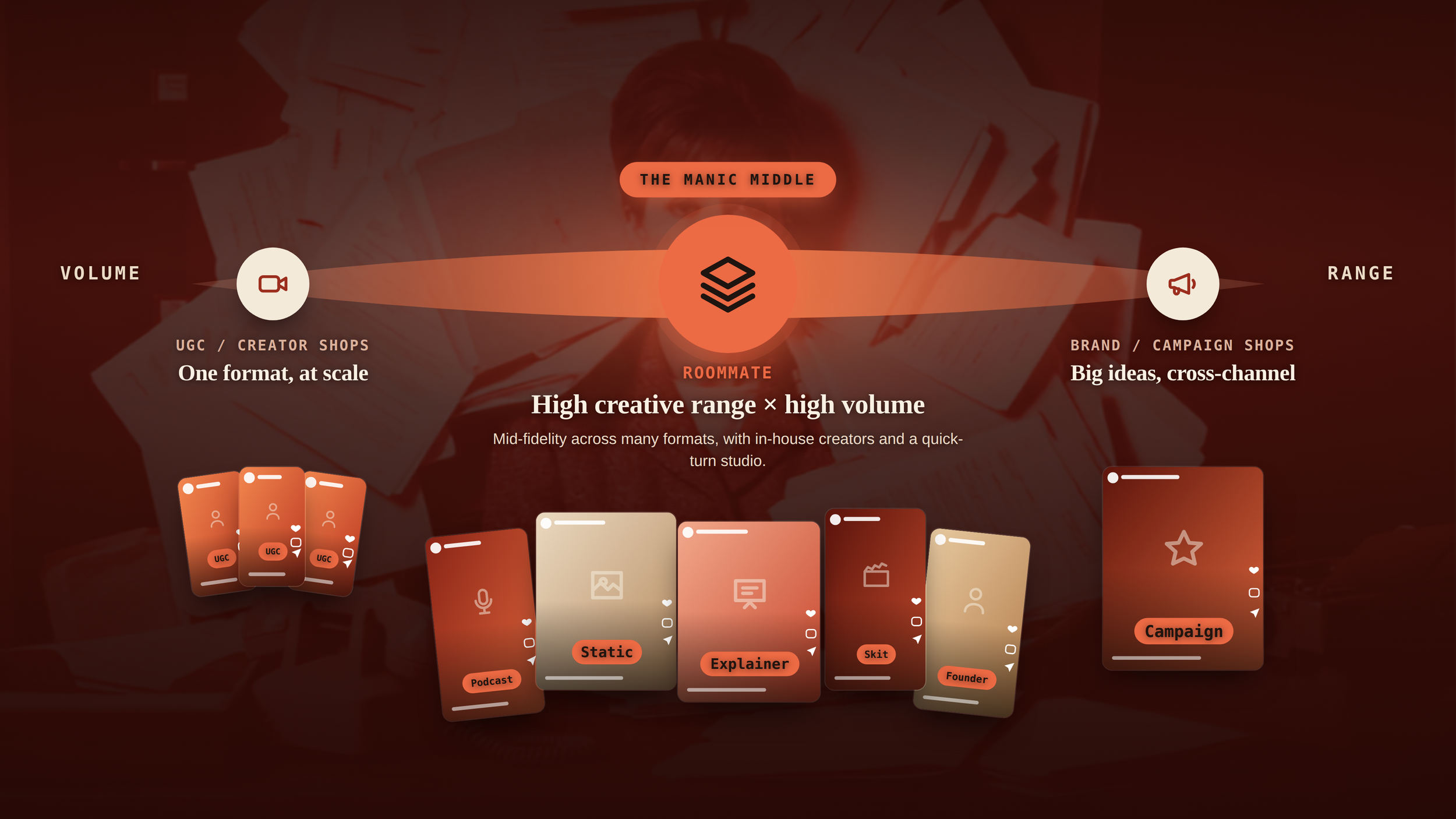
We have The Manic Middle Solution: Our Social Operating System
For years I pictured the algorithm as the giant green head from the Wizard of Oz. Loud, mysterious, vaguely threatening. Pull back the curtain and it's the little guy asking for options. Which is permission, honestly. Make more interesting work, put it out, see what happens. You just need a system so it doesn't turn into chaos.
We call that a Social Operating System. It's the plan that turns "make more content" into something a team can actually run:
The audiences you're making it for, and the tension each one feels
The messages that matter to them
The formats that carry those messages, and the mix you need
The production plan for how it all gets made, by whom, and how fast
The quantity of genuinely different creative your media plan actually needs
The rules that keep it on brand while the team moves quickly
Then it runs in cycles. Every few weeks a new batch of concepts goes from brief to production to testing, and the results shape the next round. No month-long strategy exercise required.
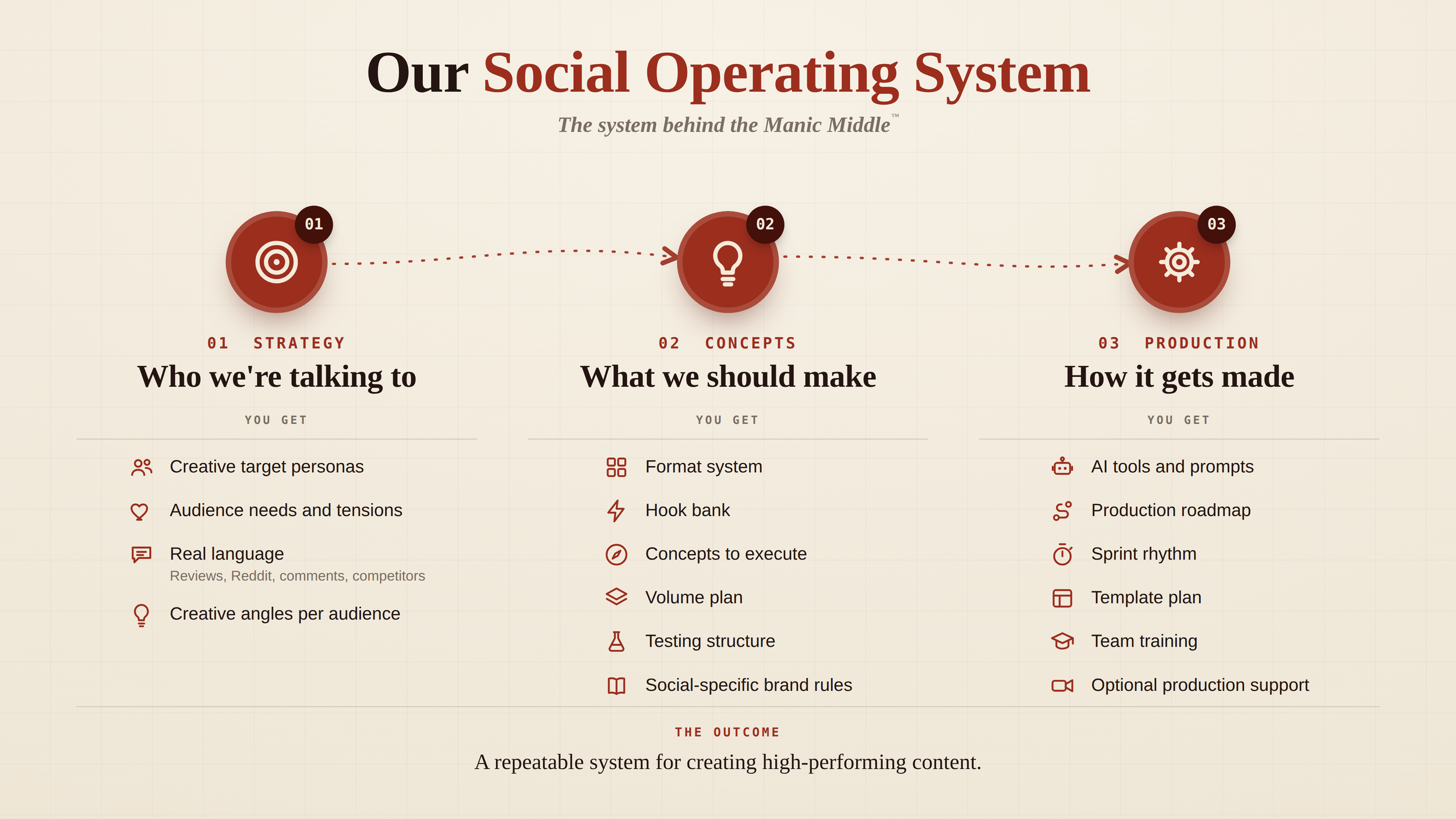
The goal is to build a repeatable system for creating high-performing content with enough creative range for the algorithm to turn social into a true growth channel.