
Hard Seltzer isn’t the Only Gift From the 90s.
I want to go on the record that I’m not anti-Meta, not fully anyway. Heck, we’ve built an entire offering to help brands navigate this new normal (read about our concept, “The Manic Middle”). But just because Meta doesn’t favor your consistency and your standards, doesn’t mean you should throw them out the window either.
Readers, if you’re ok hurting my feelings a little, you can bypass the cautionary tale to scroll to the end for the tips.
Picture this: San Francisco, 1999…
It was my first real gig in advertising. The skies were full of angels, gracing everyone who had a prayer and a “plan” with large sums of money. It was the dot-com boom, everyone was betting on the internet. Those with funds in hand were rushing the doors of digital experts to generate the revenue they had promised these angels. I had little trouble landing a job at a digital agency carrying my degree in French and English Literature - sorry, Gen Z, it was a very different time.
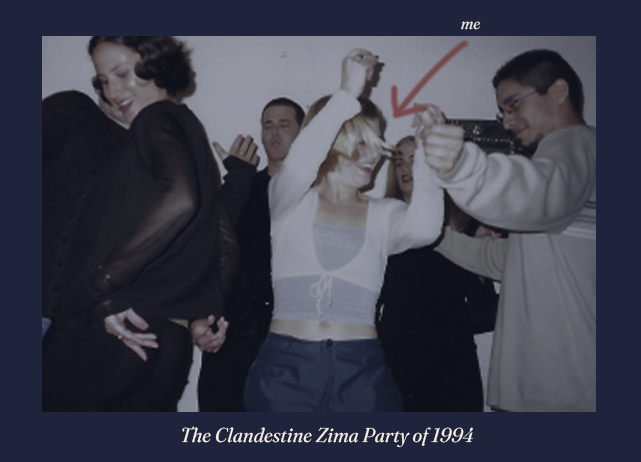
Modem Media Poppe Tyson (quickly truncated to Modem Media, which eventually led to Modem-Publicis, Modem-Digitas, then, simply Digitas, yada, yada) placed the first-ever banner ad for the brand Zima, the OG in hard seltzers - sidebar, I’ve got a great story about nearly pulling off a clandestine party while my parents were out of town had it not been for that pesky, exploded bottle of Zima in the freezer.
The floors at Modem Media were bustling with 20-somethings and a few folks in their 30s heading departments and such. Everyone was extremely bright, incredibly hardworking, ambitious, and did I mention in their 20s? You can imagine the energy, excitement, very long hours and debauchery of it all - another sidebar, at least 6 marriages came out of that agency just in the short time I was there, my own included…also for another post.
Battle of the Firsts. Not trying to start a beef with Kim Kardashian here, but we were actually breaking the internet. Each and every day. Our charge was to help our clients like Intel, Sony PlayStation, and E*TRADE manifest their brand values of innovation and curiosity by doing stuff that was unthinkable at the time. Convincing publishers to disrupt their content with little blue men crawling up the sides of the page and yanking down their cherished news. It was all in the name of firsts.
It was an exciting time, but it was not a conventional instruction in advertising. Digital was the future and young, tech-forward brains were guiding what worked and how brands lived in this new space. Consistency, storytelling and value propositions gave way to format, function and “never-been-done”. While I do believe we did an excellent job maintaining our brand’s positions and integrating their campaigns, that was second to the new rules of the internet.
Fast forward 7 years or so…
Firsts are now hard to come by and audiences are no longer fazed by what they are seeing online. Brands start finding themselves in crisis. They had handed themselves over to the rules of format and function and forgotten what they stood for - at least their audiences had. At that time, I was working with a large technology company who had gone from industry leader, to #3. In hopes of uncovering the issue, they conducted a brand study only to learn that their audience likened them to a saltine cracker. They were meh. No substance, no real differentiation. No reason to care.
And they weren’t alone. So many lost themselves building a brand presence in Second Life, they forgot to do so IRL. Over the next decade, I was filled with work guiding companies back to the basics of brand strategy, customer research - with actual customers, upper-funnel campaigns and customer lifecycle marketing.
Which brings us to the present and full circle.
The tech-forward brains are again dictating the rules. And they aren’t concerned about your brand managers or your standards. In fact, the more you protect them, the less successful you are on their platforms.
So what to do? How do you win in this new space while preserving and fostering your brand? Besides the obvious answer of hiring us, I do have a few tips:
It’s time for an addendum. You can’t fight it. The beast is important in your marketing mix so you need to feed the beast. And this beast is HUNGRY, it’s demanding 15 - 45 new pieces of content a month depending on your spend. Rather than deliberate whether each and every piece of new content is “on brand” and killing a ton of relevant hooks in the process, adapt to the platforms. Don’t ditch the guidelines, they’re what got you here. I’m talking about drafting an addendum. One that recognizes this is a very different medium and it needs its own rules. One that works for your brand and the beast alike.
Make a coordinated effort. How many organizations still house PR and marketing in separate wings? Paid and organic under different management? Website off on its own IT island? If not a full integration, now is the time to at least collaborate. Each of you has what the other needs. You are likely sitting on databases full of content that saw a small breath of life. But, when clipped and edited well, this database could be the food this beast (and your audience) is craving. Marketing needs the content from PR and web. PR, you know you would love that content to have a few more legs. Also, maybe make marketing’s life easier and take a few requests the next time you go create. And web, well, you’re the likely destination, so play nice.
Do your research - real, actual, customer research. I know we can learn a lot from Reddit, and social listening can break open the next great hook. But relying on these sources to feed your content negates a couple major sociological truths: 1) our online selves are not our real selves. This world is performative. 2) a large percentage of your customers aren’t big publishers, they’re mainly voyeurs in this world. Get some real, tangible customers in a safe, person-to-person space. Listen to their worries, their hopes, their motivations and what your brand actually means to them in their lives. Look for the real opportunities to connect.
And remember, Roommate is here to help.
